
Aerial Elixirs™ American Lady Porterweed
Stachytarpheta 'American Lady'
- 3.5 in · $14.99 · 34 available
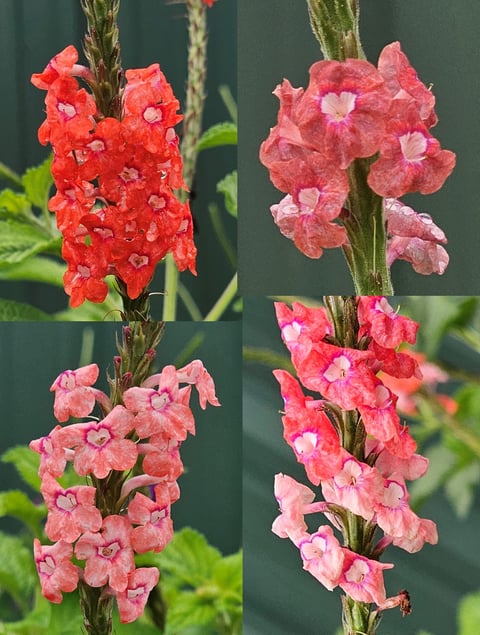
The fickle flower colors range from orange, to deep watermelon nearing plum, to coral tones, to pale pink and are produced on narrow elongating spikes on this large growing Porterweed from spring to frost attracting a wide array of pollinators. Aerial Elixirs™ American Lady Porterweed is the first in this series named in honor of a butterfly which sports similar colors on its upper and lower wing surfaces. We think this is a hybrid Stachtarpheta with obvious S. mutabilis in its parentage and potentially a tetraploid due to everything about the parent plant being larger than normal including slightly larger flowers, thicker and taller flowering spikes, thicker stems, and larger foliage. This is definitely one of the more vigorous plants in this series growing to about 5-6' high and wide by the end of the growing season and potentially larger. If you are not familiar with Porterweeds, members of the genus Stachytarpheta, these are shrubby tropicals with exceptional flower power, excellent nectar production, AND these are the plants that many hummingbirds feed on in their winter resting grounds in Central and South America. They also attract a variety of butterflies, large and small, as well as larger bees. Provide a full to mostly sunny site in an average moist, moderately fertile, average to well-drained soil for optimum vigor and flowering. Flower color seems to be most strongly affected by rain that appears to literally wash the color out and since the flowers last for about 2 days it is not uncommon to have two colors on the same spike in the same day. On cloudier days, the flowers seem to lean more into the orange tones and on sunnier days more toward watermelon and nearing plum.
Porterweeds are likely the number one favorite nectar plant for butterfly gardeners and surely for the butterflies themselves. I would be surprised to find a plant that produces a more continuous supply of nectar rich flowers from summer to frost, even most Lantana has to catch its breath from time to time during the heat of summer. This is one of the few plants that you will find consistently at nearly every butterfly conservatory. In zone 8B we find that the larger growing Porterweeds, like Coral and Nectarwand Red, may return from the roots in late spring if well mulched. In zone 10 it is likely to be a reliable perennial if not evergreen. Porterweed is known to reseed particularly in mild winter climates but if this is truly a tetraploid it may be sterile and we do plant to test that as time allows.
Porterweeds can also be used as fresh cut flowers that can last a week or more. Harvest the stems after at least the first set of flowers have begun opening at the base of the flower spike. Cut the flowering stem to the desired length somewhere below the first set of leaves, which can be left on the stems and may potentially help the flowering last longer, and place the freshly cut stems in clean fresh water.
- Zones
- 10, 11, (9?, 8B?)
- Sun
- Full sun, Mostly sunny, Part shade
- Size
- 5-6'H x 5-6'W
- Bloom
- Spring-frost or year round in warm, frost free conditions.
- Soil
- Average moist, average to well-drained, moderately fertile soils.
Family: Verbenaceae
Find it in: Tropical Plants, Bee Plants, Butterfly Plants, Cut Flowers, Hummingbird Plants, Louisiana Super Plants, Moon Moth Garden Plants, Perennials by Size Class, Plants by Flower Color, Porterweeds, Rare & Unusual Plants