
Black Cherry Tree
Prunus serotina
- 4.5 in · $14.99
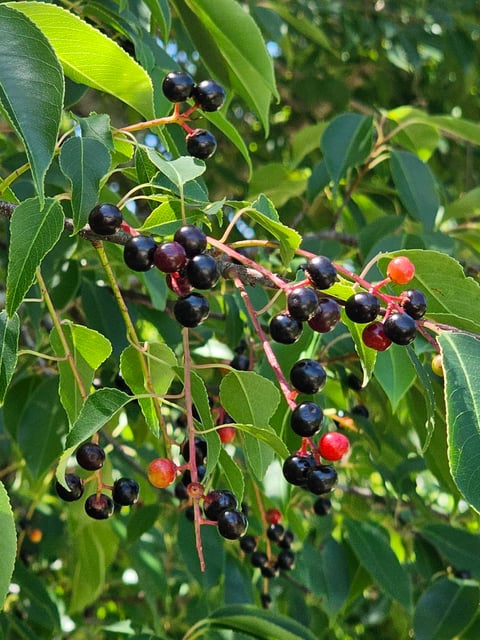
Drooping spike-like clusters composed of numerous, lightly fragrant, small white flowers are produced in spring and are followed by small, 1/4-1/3" diameter red cherries that ripen to black and are consumed by a wide variety of birds and small mammals. The Black Cherry Tree, Prunus serotina, is a moderately fast growing, medium to large, deciduous native tree found throughout much of the eastern, central, and southwestern US as well as into Canada, Mexico, and into Central America. Its medium green serrated foliage is a caterpillar host for the Eastern Tiger Swallowtail and Viceroy butterflies as well as a variety of moths. The Black Cherry fairly consistently produces good yellow to red fall color even here in zone 8B in southwestern Louisiana and the white and gray winter bark adds to its interest. Provide a full to mostly sunny site in well-drained, average moist, fertile soils for optimum growth and vigor.
The Black Cherry may be considered a pest by some gardeners due to its propensity for seedlings to emerge in unwanted areas. The fruit is edible though it may be an acquired taste when raw and is used to make jellies, pies, and drink flavorings. The juice is also used herbally. The wood of Black Cherry is widely used as a fine lumber for furniture, cabinetry, and more. Fruit may stain sidewalks, drives, etc... Moderately tolerant of soil types so long as they are not overly dry or wet. Should not be browsed by livestock.
- Zones
- 4, 5, 6, 7, 8, 9
- Sun
- Full sun, Mostly sunny
- Size
- 40-80'H x 20-40'W
- Bloom
- Spring - earlier in warmer climates and later in cold winter regions
- Soil
- Average moist, fertile, well-drained soils. Somewhat drought resistant once fully established. An organic mulch is recommended.
Family: Rosaceae
Find it in: Fruits & Herbs, Bee Plants, Butterfly Plants, Louisiana Native Plants, Native Plants, Plants by Flower Color, Plants by Fruit Color, Plants for Fall Color, Salt Tolerant Plants, Shrubs & Trees, Shrubs by Size Class, Songbird Plants, Drought Resistant Plants