
Blue Mistflower
Conoclinium coelestinum
- 3.5 in · $12.99 · 2 available
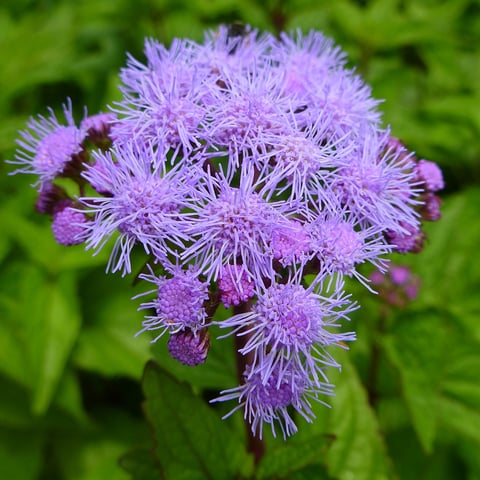
Fuzzy flat topped clusters composed of blue to purple Ageratum-like flowers are produced atop sturdy stems beginning in early to midsummer, continuing into fall, and often until the first hard frost or freeze. The flowers attract a variety of pollinators, especially native bees and late season butterflies. The Blue Mistflower, Cononclinium coelestinum, is a rhizomatous colonizing native perennial that makes an easy tall groundcover where it can wend its way around larger growing plants in the garden or landscape. It also makes an easy addition to more naturalistic settings like roadside plantings, meadows, and prairies. The Blue Mistflower generally prefers an average to moist, fertile soil in full to partly sunny sites for optimum vigor and flowering. This species was selected as the 2024 Plant of the Year by the Georgia Native Plant Society.
The Blue Mistflower is one of our longer flowering native perennials and is commonly found in moist, organic rich soils along streams, ditches, moist meadows or prairies, and near swamps and baygalls throughout the central and particularly the eastern US. spread can be controlled by digging up the invading portions and so is easily shared. Plants do seem to benefit from periodic division every 2-3 years. Space new transplants about 6-12" apart. Remove spent flower heads before seeds ripen if reseeding is a concern.
Secondary images were taken at Allen Acres B and B, Pitkin, Louisiana.
- Zones
- 5, 6, 7, 8, 9
- Sun
- Full sun, Mostly sunny, Part shade, Part sun
- Size
- 18-30"H x 8-12" and spreading, space at 8-12" apart
- Bloom
- As early as late spring and early summer, with the main flowering beginning about midsummer and continuing into fall, up until the first hard freeze or frost.
- Soil
- Moist to average moist, fertile, acid to neutral soils. Adaptable to soil types including clay and sandy loams and can tolerate short term inundation or short term drought.
Family: Asteraceae
Find it in: Groundcovers, Bee Plants, Butterfly Plants, Louisiana Native Plants, Native Plants, Perennials, Perennials by Size Class, Plants by Flower Color, Plants for Bogs & Wet Areas, Plants for Fall Color, Shade Tolerant Plants, Songbird Plants