
Crushed Coral Mamou Bean
Erythrina herbacea 'Crushed Coral'
- 4.5 in · $24.99
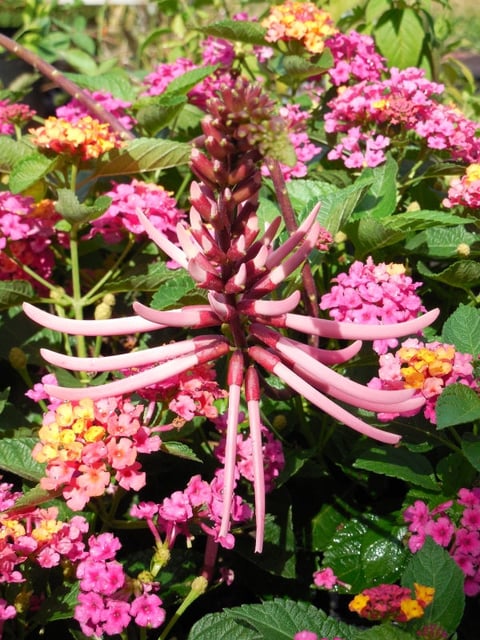
Crushed Coral Mamou Bean produces tall spikes of dark coral pink, 2-3" tubular flowers in late spring and early summer atop sturdy stems that are held well above the foliage of this tough native perennial. The Mamou Bean is a drought tolerant and hardy shrublet that freezes back to the ground to return in spring. The flowers are followed by dark colored bean pods that split open to display their brilliant red-orange beans that can remain on the plant all winter. Excellent for Hummingbirds. Crushed Coral Mamou Bean is an Almost Eden exclusive introduction. Caterpillar host: Holly Blue.
Crushed Coral Mamou Bean produces tall spikes of dark coral pink,2-3" tubular flowers in late spring and early summer atop sturdy stems that are held well above the foliage of this tough native perennial. The Mamou Bean is a drought tolerant and hardy shrublet that freezes back to the ground to return in spring. The flowers are followed by dark colored bean pods that split open to display their brilliant red-orange beans that can remain on the plant all winter. Excellent for Hummingbirds. Caterpillar host: Holly Blue. Crushed Coral Mamou Bean is an Almost Eden exclusive introduction.
Here in zone 8B the Mamou Bean is a die-back perennial freezing to the ground each winter and returning in spring. In zone 9 it may be more shrub-like, and in zone 10, like at the National Butterfly Center near Mission, Texas it can grow into a small tree reaching 20' high. Mulch young plants to aid in their establishment during the first few years in the northern portions of its range.
Flowers that have been pollinated will develop long, swollen pods that turn black and curl with age. Towards the end of summer the dark pods will split open showing off the bright, shiny red-orange beans that add color to the fall and winter garden. The stems make a nice addition to fall and winter arrangements just remember that the beans and much of the plant itself are considered poisonous. We cannot recommend the use of the this plant as an herb but the Native Americans used the roots and seeds to treat a variety of ailments and extracts have been used to make cough syrups, especially in south Louisiana.
Tough is really an understatement when it comes to the Mamou Bean, sometimes called the Cherokee Bean! Locally we find it all across the Pineywoods but it is most common in the drier, sandy uplands. Tolerant of a wide range of soil types the Mamou is also a component of the seasonally wet, clay soils of the Cajun Prairie as well as the saltier, sandy soils of the Gulf Coast. It is not uncommon to find it growing in the partial shade of the Longleaf Pine ecosystem but many of the most beautiful specimens can be found growing in full sun. Cutting back dead stems in late winter or early spring is the only real maintenance required.
For more information on the Coral Bean see its page in the Florida Native Plant Society's Native Plant Owner's Manual written by Mark Hutchinson, just click here or the "More info from universities..." link below the images.
- Zones
- 7B, 8, 9, 10, 11
- Sun
- Full sun, Mostly sunny, Part shade, Part sun
- Size
- 3-5'H x 2-3'W (8-20'H in mild winter climates)
- Bloom
- Late spring to early summer.
- Soil
- Tolerant of most soil types but enjoys regular moisture and moderate fertility. Somewhat to moderately drought resistant once well-established.
Family: Fabaceae
Find it in: Perennials, Butterfly Plants, Hummingbird Plants, Louisiana Native Plants, Native Plants, Plants by Flower Color, Plants by Fruit Color, Shrubs by Size Class, Drought Resistant Plants