
Jean's Jewel Salvia
Salvia 'Jean's Jewel'
- 4.5 in · $14.99
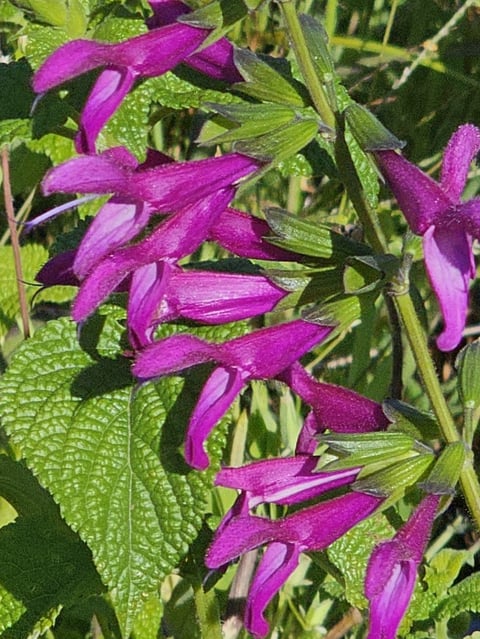
Large spikes of bright pinkish-purple, 2" long, tubular flowers are produced from mid to late spring or early summer until fall attracting a variety of larger pollinators, especially hummingbirds. Jean's Jewel Salvia, a Salvia guaranitica hybrid, is a rhizomatous, clump forming, herbaceous perennial cloaked in medium green, anise-scented foliage and growing to about 3-4' high and 2-3' wide by the end of the growing season. The fragrant, anise or licorice scented foliage makes it deer and rabbit resistant. Easily grown in a full sun to partly shaded site in an average moist, fertile, average to well-drained soil. An organic mulch is recommended.
Anise Sages, Salvia guaranitica and its hybrids, are easily grown perennials with excellent flower power and their nectar-rich flowers are adored by hummingbirds as well as some larger bees and butterflies. Their showy spikes of large, 2" long, tubular, nectar-rich flowers are produced throughout the growing season in shades of blue, purple, magenta, and pink on plants ranging from 2-5' high. They can be rhizomatous, producing small potato-like tubers, like the old favorite Black and Blue, to more tightly clump forming like Electric Purple, but most cultivars fall somewhere in between. The Anise Sages have good deer and rabbit resistance thanks to their anise or licorice scented, medium to rich green, quilted foliage.They are tolerant of partially shaded conditions, but are typically at their best in full to mostly sunny sites provided they have ample available moisture. These Salvias typically prefer average moist to moist, acidic to neutral, loamy, average to well-drained soils with ample organic matter. An organic mulch is recommended in areas where hard freezes occur, like in zones 8-9. The mulch will also help to maintain a more consistent moisture level among its many other benefits. Anise Sages are vigorous and floriferous enough to be enjoyed as summer annuals or container plants where not hardy. In spring, once the danger of hard freezes have passed and new growth commences, the previous year's stems can be cut back to near ground level. We recommend a balanced, acidic, slow-release fertilizer be applied in spring once the plants move into new growth and it may be reapplied as needed until about midsummer. Enjoy!
- Zones
- 8, 9, 10, 11, (7B?)
- Sun
- Full sun, Mostly sunny, Part shade
- Size
- 3-4'H x 2-3'W
- Bloom
- Mid to late spring or early summer and into fall. Earlier in warmer winter regions.
- Soil
- Average moist, fertile, average to well-drained soils. An organic mulch is recommended in areas where hard freezes occur, like zones 8-9.
Family: Lamiaceae
Find it in: Salvias, 2026 New Plants, Bee Plants, Butterfly Plants, Hummingbird Plants, Perennials, Perennials by Size Class, Plants by Flower Color, Drought Resistant Plants