
Midas Possumhaw Holly
Ilex decidua 'Midas'
- Quart Pot · $24.99
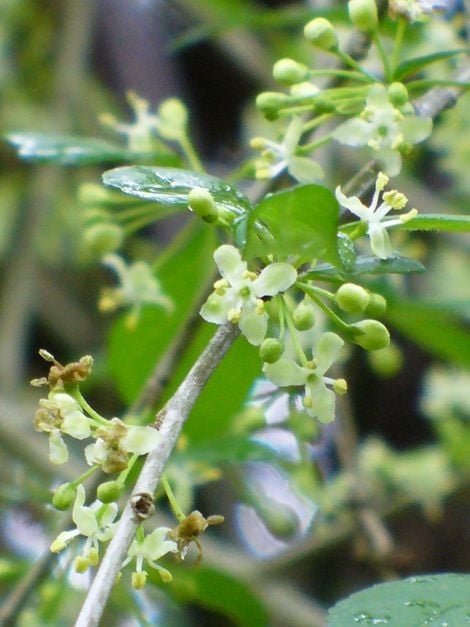
This is the male pollinator for Finch's Gold and Warren's Red Possumhaw Hollies and so it only produces the dainty white and green flowers that attract bees and small pollinators but these plants do not set fruit. The female Possumhaw Holly, Ilex decidua, is also readily pollinated by the American Holly, Ilex opaca, and most any other native male holly that flowers at the same time as the female Possumhaws and one male can effectively pollinate several females. They do not necessarily have to planted next to one another but should be in the vicinity where the bees can transfer pollen. This is a large growing, multi-stemmed, native deciduous shrub or small tree that has few if any pests or diseases. They are quite tolerant of growing conditions from average moisture, to wet, to periodically flooded sites in full sun to partly shaded sites.
The Possomhaw Holly makes a great addition to the fall and winter garden where its glowing red berries (on female plants like Warren's Red and Finch's Gold) brighten up the winter landscape for months. So long as you have male holly trees in your area and bees to do the actual pollinating, practically any holly species that flowers at the same time will do, fruiting should be plentiful. Ilex decidua is tolerant of periodically flooded areas but will also grow on well-drained soils equally well. It does prefer average moist conditions but is somewhat drought resistant once-well established.
The brightly colored berries of hollies are readily devoured by a wide variety of bird species and other wildlife. The spring flowers of many holly species offer not only a sugary reward of nectar to the many native bee species that pollinate them but also provide a small caffeine kick as well.
- Zones
- 5, 6, 7, 8, 9
- Sun
- Full sun, Mostly sunny, Part shade, Part sun
- Size
- 10-15'H x 10-15'W
- Bloom
- Spring.
- Soil
- Average moist, moist, to well-drained soils. Clay to sand to loam. Tolerant of periodic flooding as well and somewhat drought resistant once well-established.
Family: Aquifoliaceae
Find it in: Shrubs & Trees, Bee Plants, Louisiana Native Plants, Native Plants, Plants by Flower Color, Plants for Bogs & Wet Areas, Shrubs by Size Class, Songbird Plants, Texas Superstar® Plants, Drought Resistant Plants