
Purple Giant Milkweed
Calotropis gigantea 'Purpurea'
- 4.5 in · $19.99
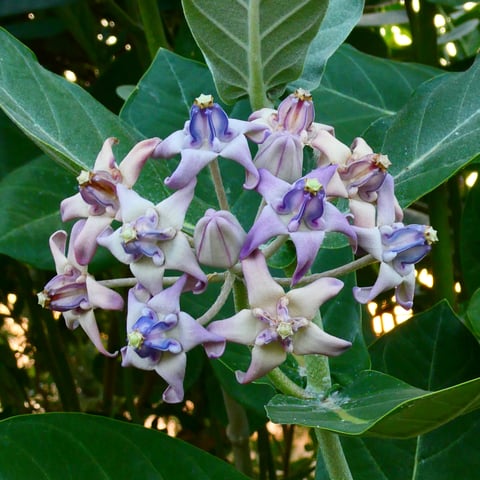
Clusters of white to lilac, up to 1" wide, star-shaped, lightly fragrant flowers are produced nearly continuously throughout the warmer months of the year. The large velvety, white to gray green, large rounded tropical foliage of the Giant Milkweed make excellent fodder for Monarch caterpillars and one leaf can provide a substantial amount of food. A large growing shrub in tropical climates where it can be trained into a tree form, grown as a shrub, or hedge. The Giant Milkweed can easily be maintained as a large container plant.
This is the purple flowered form of the Giant Milkweed, Calotropis gigantea. We also offer the white flowered form.
The flowers of the Crown Flower are used in leis, flower arrangements, and in religious offerings. The highly toxic sap is said to be used to tip poison arrows although it is also widely used medicinally to treat a variety of ailments. The strong and durable plant fibers are harvested to make rope, fishing nets, bowstrings, etc...
This is a naturally tall and relatively upright growing plant when young. As the Giant Milkweed begins to get some size on it as well as a strong root system established it will begin to branch naturally on its own, seemingly flowering from the tip of every stem and with multiple flower clusters opening over a seemingly continuous cycle. This is a true tropical plant and the hotter it is the happier, more vigorous, and floriferous the Giant Milkweed seems to be.
Young plants are usually single stemmed and their gangly appearance after winter may tempt us to prune them. And you can prune them or tip them and they should not die from it but if you are patient it will develop into a fuller plant on its own given time. Once large and well-established, the Giant Milkweed will begin to branch and should eventually begin to produce new canes from the crown of the plant until eventually it is much more full and showier plant. If you do choose to prune it, especially during the shorter cooler days of winter, the initial side branches that develop may be smaller with smaller foliage than what is typical of this giant. Once the days warm to above about 60oF at night and 80oF+ during the day these plants seem to really take back off.
To learn more about additional beneficial insects that Milkweeds support see our growing guide: Milkweed: Much More than Just a Monarch Host.
- Zones
- 10B, 11, (9B?, 9A?)
- Sun
- Full sun, Mostly sunny
- Size
- 8'H x 4-6'W, to 12-15'H in tropical climates
- Bloom
- May flower year round under tropical growing conditions.
- Soil
- Well-drained, average moist to somewhat dry, poor to moderately fertile. Drought resistant once well established.
Family: Apocynaceae
Find it in: Root Hardy Tropicals, Butterfly Plants, Deer Resistant Plants, Plants by Flower Color, Plants by Foliage Color, Drought Resistant Plants