
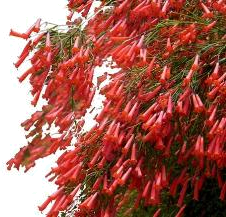
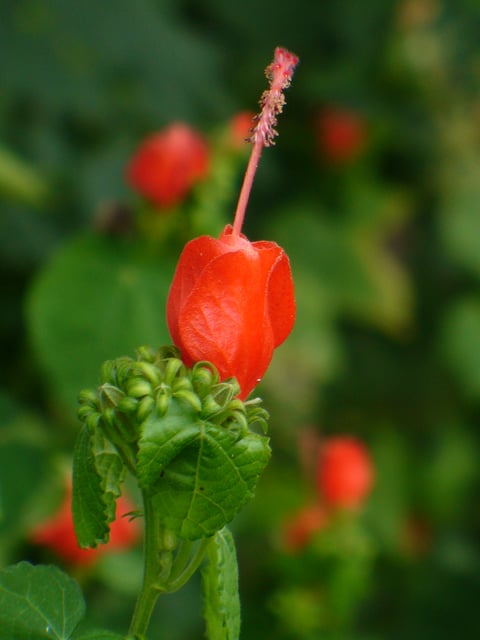
Red Turk's Cap
Malvaviscus arboreus var. drummondii
- 3.5 in · $12.99 · 37 available
A multitude of upward facing, sleepy, scarlet blooms are born among the soft, dark green foliage from late spring to frost. A hardy and long-lived, spreading to upright perennial, Turk's Cap is an easy to grow heirloom that will flower in sun or light shade. An excellent nectar plant for hummingbirds as well as butterflies. Caterpillar host: Glassy Winged Skipper. Resistant to browsing by deer and moderately drought resistant once well-established. The ripe fruits are readily consumed by birds and other wildlife, along with the occasional curious human.
A multitude of upward facing, sleepy, scarlet blooms are held above the soft, dark green foliage from late spring to frost. A hardy and long-lived, spreading to upright perennial, Turk's Cap is an easy to grow heirloom that will flower in sun or light shade. An excellent nectar plant for hummingbirds as well as butterflies, especially the yellow Sulphurs. Caterpillar host: Glassy Winged Skipper. Resistant to browsing by deer and moderately drought resistant once well-established. The ripe fruits are readily consumed by birds and other wildlife, along with the occasional curious human.
Turk's Cap are native to portions of the southern US although they have been passed around so much in southern gardens it may be hard to say just where anymore. Either way, these are excellent, hardy, and long-lived perennials with immense flower power. Shade tolerant, deer resistant, moderately salt tolerant, and moderately drought resistant once they are well-established and few plants can compete for adaptability. Provide your Turk's Caps with a well-draining, moderately fertile soil, preferably with at least 4-6 hours a day of direct sunlight for the best results. The more sunlight they get the fuller the plants tend to be and the more flowers they generally produce. The only real maintenance for Turk's Cap is to prune away the dead stems in winter where they freeze to near the ground and to mulch them as needed. Where they don't freeze back, a hard late-winter pruning will act as a renewal and may help to rid them of overwintering pests as well as to keep them full and in bounds (if you can stand to remove the flower buds).
A Dawn Stover Nifty Fifty favorite herbaceous plant! Dawn is a Research Associate at SFA Gardens in Nacogdoches, TX and currently maintains the Mast Arboretum plant collection. For more about Dawn, the wonderful arboretum, and Stephen F Austin's excellent horticultural program at SFA Gardens click here.
Turk's Cap is well-loved and so is known by a variety of common names including: Turk's Turban, Ladie's Eardrops, Scotchman's Purse, Wild Fuchsia, Drummond Wax-Mallow, Texas Mallow, Mexican Apple, Red Mallow, May Apple, Wild Turk's Cap, Bleeding Heart, Sleeping Hibiscus, Sleepy Mallow, Cardinal's Hat, Manzanilla, Turkscap, and Wax Mallow.
- Zones
- 7, 8, 9, 10, 11
- Sun
- Full sun, Mostly sunny, Part shade, Part sun
- Size
- 3-4'H x 3-5'W, larger in mild winter climates
- Bloom
- Late spring or early summer until frost to potentially year-round in frost free climates.
- Soil
- Average moist, moderately fertile soils with good drainage. Moderate drought tolerance once well-established. Adaptable to soil types. An organic mulch is recommended in zones 8-9.
Family: Malvaceae
Find it in: Turks Cap, Butterfly Plants, Deer Resistant Plants, Heirloom Plants, Hummingbird Plants, Louisiana Native Plants, Native Plants, Perennials, Perennials by Size Class, Plants by Flower Color, Texas Superstar® Plants, Drought Resistant Plants