
Shamrock™ Orange Flame Lantana
Lantana camara 'Balshamorfim'
- 3.5 in · $12.99 · 6 available
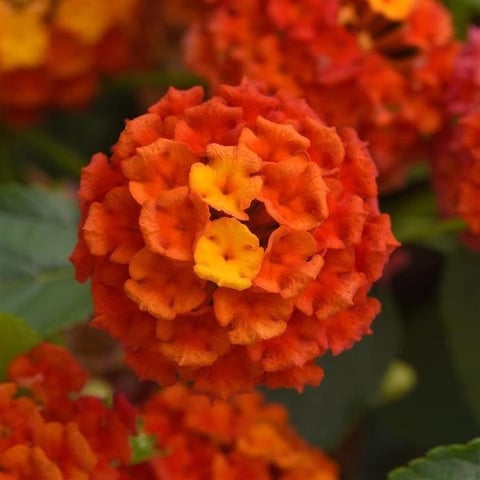
The clusters of nectar rich, larger flowers open a deep golden yellow and quickly deepen into fiery oranges to near red attracting a variety of pollinators and especially butterflies and bees. Shamrock™ Orange Flame Lantana was selected it for its moderately vigorous but compact habit, deep green foliage, larger flowers, and exceptional flower power all lending this variety to use in containers, as specimens or in mixed container gardens, as well as in hanging baskets, and for summer long color in a sunny garden or landscape. Provide Lantana with a full to mostly sunny site in an average moist, fertile soil with good drainage for optimum vigor and flowering.
Lantana are only second to Porterweed in our garden for their ability to attract butterflies! Lantana are loaded with flower power and normally flower continuously from late spring to frost. This durable and reliable perennial is moderately drought tolerant, deer resistant, salt tolerant, and is generally pest free. For the best results provide your Lantana with an average to well draining soil with average moisture in an area that gets 6 hours or more of sun per day.
Cutback or shear by 1/3 to 1/2 in early to midsummer and give a light fertilize if flowering on your Lantana slows due to seed set or insect pressure. To help protect and insulate the crown of your Lantana wait until new growth begins again in spring to cutback after winter. A breathable but insulative mulch, such as pine straw, piled in and around the crown of these cold hardy, die-back tropical to subtropical shrubs will also help to ensure winter survival. A settled depth of 2-4" and piled about 12-18" beyond the crown is often sufficient for most established plants. Establishment in early spring is optimum once all danger of freeze and frost have passed, although, planting until about midsummer is normally acceptable in zones 7 and 8. Establishment should be successful from early spring through summer in most of zone 9 and basically year round in zone 10-12
Cutback or shear by 1/3 to 1/2 in early to midsummer and give a light fertilize if flowering on your Lantana slows due to seed set or insect pressure. To help protect and insulate the crown of your Lantana wait until new growth begins again spring to cutback after winter. A breathable but insulative mulch, such as pine straw, piled in and around the crown of these cold hardy, die-back tropical to subtropical shrubs will also help to ensure winter survival. A settled depth of 4-6" and piled about 12-18" beyond the crown, depending on how harsh your winters are, is often sufficient for most established plants. Establishment in early spring is optimum although into midsummer is normally acceptable in zones 7 and 8. Establishment should be successful from early spring through summer in most of zone 9 and basically year round in zones 10-12 and in frost-free locations. If you've purchased small plants on sale in fall, consider uppotting them, if needed, and overwintering them where the stems and soil won't freeze to give your plants a head start on spring.
Image courtesy of Ball Horticultural Company.
- Zones
- 8, 9, 10, 11, 12, (7?)
- Sun
- Full sun, Mostly sunny, Part shade
- Size
- 12-16"H x 12-14"W
- Bloom
- Spring to fall to year-round under warm tropical conditions.
- Soil
- Average moist, well-drained, fertile soils. Somewhat drought resistant once well-established. A breathable, preferably organic, winter mulch is recommended in zones 8-9.
Family: Verbenaceae
Find it in: Tropical Plants, Bee Plants, Butterfly Plants, Deer Resistant Plants, Hummingbird Plants, Lantanas, Perennials, Perennials by Size Class, Plants by Flower Color, Salt Tolerant Plants, Drought Resistant Plants