
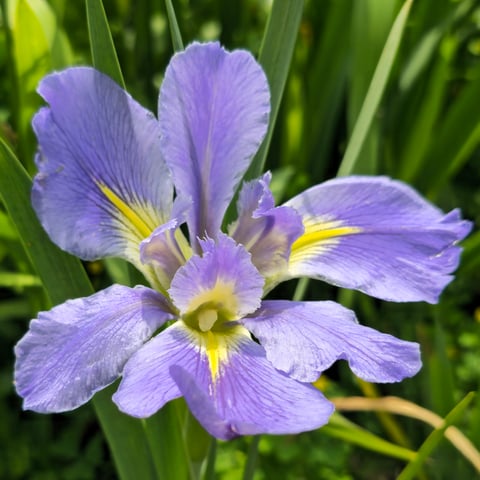
Sinfonietta Louisiana Iris
Iris × 'Sinfonietta'
- 4.5 in · $14.99
Medium to deep blue falls and standards with the falls being accented by contrasting gold crests at their base are produced in early to midseason, or March to April, atop 30-36" high stems. Sinfonietta Louisiana Iris has been highly popular since its introduction and was awarded an Honorable Mention in 1990 and the Award of Garden Merit in 1992 by the American Iris Society. Louisiana Irises are easy and adaptable, rhizomatous perennials with fans of deep green sword-like foliage and seem as at home in standing water as they do in average moist garden soils. Remember that these plants do most of their growing in fall and winter and so this is when they should be fed and fall is also a great time to divide plants if desired. Provide a full to mostly sunny site for optimum vigor and flowering.
These easy to grow perennials are happy to grow under average garden conditions provided you understand their growth habits. Louisiana Irises are late summer dormant and are fall, winter, and spring growing. They are accustomed to a short dry period during the dog days of August and September here in Louisiana in the low areas. October averages to be our wettest month, with consistent rains throughout fall, winter, and spring when flowering generally occurs. Consider fertilizing them if needed during these growing periods if soils are poor. The parents of many of these species grow in the bayous where the sediment and nutrients from the meltwater of northern spring rains is deposited in these drainages as much of the central and northern US drains into Louisiana via the Red, Mississippi, and the many other water ways that drain into them. And so in the spring time they naturally expect an influx of new nutrients to help them produce their beautiful flowers. This is followed by fruit production and something of a pause in top growth with rhizome development. As the fruits become fully ripened spring foliage begins to yellow and fade away as the roots absorb all the nutrients stored in them to develop the buds of next spring. At this point the ugly foliage can be pruned away but may be best left to protect and shade the young foliage during the hottest parts of summer.
- Zones
- 6, 7, 8, 9
- Sun
- Full sun, Mostly sunny, Part shade
- Size
- 30-36"H
- Bloom
- Early to midseason or March to April
- Soil
- Wet, moist, to average moist, moderately fertile soils rich in organic matter. An organic mulch is recommended under average moist conditions in typical garden settings.
Family: Iridaceae
Find it in: Perennials, Bee Plants, Cut Flowers, Deer Resistant Plants, Iris, Louisiana Native Plants, Native Plants, Perennials by Size Class, Plants by Flower Color, Plants for Bogs & Wet Areas