
Warren's Red Possumhaw Holly
Ilex decidua 'Warren's Red'
- 4.5 in · $14.99
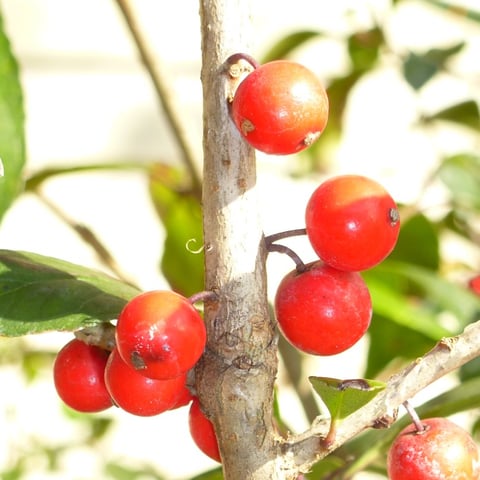
Clusters of dainty white and green spring flowers are followed by dense clusters of glossy bright red berries that often last into spring (if the birds don't get them all!). The nectar and pollen laden flowers attract bees and smaller pollinators and even provide a caffeine kick. Warren's Red Possumhaw Holly, a selection of Ilex decidua, is a large growing, multi-stemmed, deciduous shrub but could potentially be shaped into a small tree form. It has few if any pests or diseases and is quite tolerant of growing conditions from average moist to moderately wet and periodically flooded sites. Provide a full to mostly sunny site for optimum growth, vigor, and fruit set. Almost any male native holly that flowers at the same time will pollinate the female Warren's Red Possumhaw Holly including the American Holly, Ilex opaca, and we also now offer the male Midas Possumhaw Holly as well.
The Possomhaw Holly makes a great addition to the fall and winter garden where its glowing red berries (on female plants like Warren's Red and Finch's Gold) brighten up the winter landscape for months. So long as you have male holly trees in your area and bees to do the actual pollinating, practically any holly species that flowers at the same time will do, fruiting should be plentiful. Ilex decidua is tolerant of periodically flooded areas but will also grow on well-drained soils equally well. It does prefer average moist conditions but is somewhat drought resistant once-well established.
The brightly colored berries of hollies are readily devoured by a wide variety of bird species and other wildlife. The spring flowers of many holly species offer not only a sugary reward of nectar to the many native bee species that pollinate them but also provide a small caffeine kick as well.
- Zones
- 5, 6, 7, 8, 9
- Sun
- Full sun, Mostly sunny, Part shade, Part sun
- Size
- 10-15'H x 10-15'W
- Bloom
- Spring.
- Soil
- Average moist, moist, to well-drained soils. Clay to sand to loam. Tolerant of periodic flooding as well and somewhat drought resistant once well-established.
Family: Aquifoliaceae
Find it in: Shrubs & Trees, Bee Plants, Louisiana Native Plants, Plants by Fruit Color, Shrubs by Size Class, Songbird Plants, Texas Superstar® Plants, Drought Resistant Plants