
White Woodland Aster
Symphyotrichum lateriflorum
- 4.5 in · $12.99
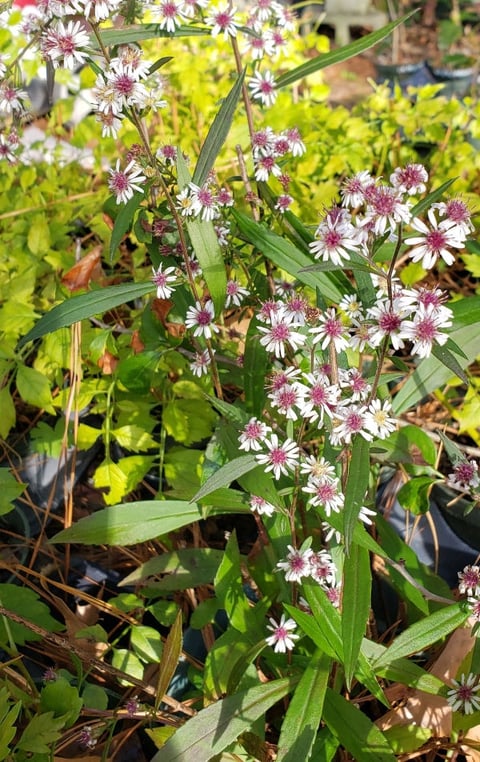
In fall loads of dainty 1/2" wide white daisies with a pinkish-purplish 'eye' literally cover the plant for weeks and offer nectar and pollen to smaller pollinators. The White Woodland Aster or Calico Aster, Symphyotrichum lateriflorum, is a small bushy clump forming native perennial common throughout the Eastern and Central US and spilling over into Canada. It is a common component of our local Pineywoods region that adds a bolt of color beneath that of the changing foliage as well as providing a pollinator food source at a time when many plants have gone to seed for the year but native bees are still stockpiling. The White Woodland Aster is fairly tolerant of full sun to partly shaded sites and is a good choice for meadows, prairies, and roadside plantings. It may reseed on exposed soils, although it does not appear to be aggressive. Caterpillar host: Field Crescent, Pearl Crescent, Texan Crescent, Roadside Checkerspot, Hoffman's Checkerspot, and American Lady.
In fall loads of dainty 1/2" wide white daisies with a purplish 'eye' literally cover the plant for weeks and offer nectar and pollen to smaller pollinators. The White Woodland Aster or Calico Aster, Symphyotrichum lateriflorum, is a small bushy clump forming native perennial common throughout the Eastern and Central US and spilling over into Canada. It is a common component of our local Pineywoods region that adds a bolt of color beneath that of the changing foliage as well as providing a pollinator food source at a time when many plants have gone to seed for the year but native bees are still stockpiling.Caterpillar host: Field Crescent, Pearl Crescent, Texan Crescent, Roadside Checkerspot, Hoffman's Checkerspot, and American Lady. The White Woodland Aster is fairly tolerant of full sun to partly shaded sites and is a good choice for meadows, prairies, and roadside plantings. It may reseed on exposed soils, although it does not appear to be aggressive.
The White Woodland Aster is fairly adaptable to soils types from drier sandy loams to the heavier clay found in the Cajun Prairie even with mild tolerance to alkalinity. It seems to prefer an average moist to moist soil and is tolerant of partly shaded sites. It is also considered to be a caterpillar host plant to the dainty but bright Pearl Crescent butterfly.
- Zones
- 4, 5, 6, 7, 8, 9
- Sun
- Full sun, Mostly sunny, Part shade
- Size
- 24-36"H x 12-18"W
- Bloom
- Fall.
- Soil
- Average moist to moist soils, but plants are fairly adaptable.
Family: Asteraceae
Find it in: Perennials, Bee Plants, Butterfly Plants, Louisiana Native Plants, Native Plants, Perennials by Size Class, Plants by Flower Color, Plants for Fall Color