Welcome, Guest ( Login )

Native Plants

Find plants that are native to the USA and are already adapted to your growing area and conditions. Including hardy perennials, trees, shrubs, and vines!
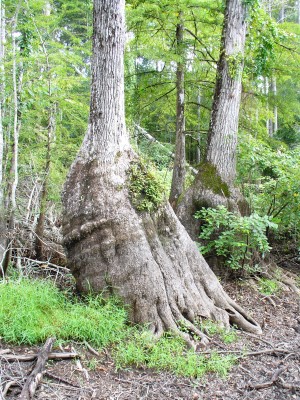

Small, greenish-white flowers are produced in spring just before or as the new foliage emerges and are an important pollen and nectar resource for native bees as well as for honey production. Flowers on female trees are followed by 1 to 1-1/2" long, edible fruits that ripen to lilac or dark purple and drop in the fall. The Water Tupelo, Nyssa aquatica, is a large, native, deciduous tree with a large conical swollen trunk similar to Bald Cypress with gray bark. The tree is adorned in large, glossy, ovate foliage that is reported to provide good yellow fall color. The Water Tupelo prefers consistently wet to moist soils to shallow standing water and full sun is likely optimum, but trees are relatively tolerant of partial shade. Item#13559

Grows To: 50-100'H x 25-50'W
Outdoor Light: Full sun, Mostly sunny, Part shade
4.5 inch Pot / 20 fl.oz. / 591 ml
Currently In Stock: 12
US$19.99

Wedelia, Yellow Creeping Ox-Eye Daisy, Yellow Dots

Wedelia trilobata, Sphagneticola trilobata

1" golden yellow daisies sit atop the dark rich green foliage of this durable groundcover. Drought tolerant once established, Wedelia revels in the heat and sun creating a dense 8-12" high mass of foliage, stems and flowers. Evergreen in mild winter climates but may freeze to the ground in the northern portions of its range. Item# 718.

Grows To: 4-8''H+ and spreads
Outdoor Light: Full sun, Part sun, Part shade, Light shade
3.5 inch Pot / 16 fl.oz. / 473 ml
Currently In Stock: 0
US$12.99
Temporarily Out of Stock
Or
Quantity Exceeds Stock Level

Email Me When Ready

Pyramidal, 6-10" high clusters of small creamy white flowers are produced in mid to late spring attracting a variety of pollinators and are followed by green fruits that ripen to reveal large black seeds covered in a thick translucent yellow to brown tissue that has been utilized as a soap. The Western Soapberry, Sapindus drummondii, is a small to medium-sized, native, deciduous tree with a vase shaped to rounded crown growing to 25-30' high and potentially to 50' high in good quality soils.The medium to deep green pinnately compound foliage provides good yellow fall color and the decorative fruits may remain on the tree into winter. This is a adaptable tree tolerant of a wide range of growing conditions from average moist to dry, acidic to alklaline, and clay to sandy or rocky soils. The plants are unbothered by browsers like deer and the almost 1/2" diameter, shiny black seeds are eaten by birds but are considered toxic to humans and mammals. Provide a full sun to partially shaded site in average to well-drained, average moist, fertile soils for optimum vigor and flowering. Item# 13551

Grows To: 25-30'(-50')H x 25-30'W
Outdoor Light: Full sun, Mostly sunny, Part shade
4.5 inch Pot / 20 fl.oz. / 591 ml
Currently In Stock: 16
US$19.99

Western Sunflower, Fewleaf Sunflower

Helianthus occidentalis

Bright golden yellow daisies top the sturdy and branched, 3-5' stems of this perennial native Sunflower. The Western Sunflower will quickly create a ground-covering colony of plants by multiplying via underground rhizomes. The spent flower stalks hold seeds for songbirds and will die back to the ground in fall but are quickly replaced by a multitude of new rosettes in winter. An easy and durable plant for naturalizing and native to much of the southeastern US. Considered to be one of the least aggressive spreading Sunflowers. Caterpillar host: Milbert's Tortoiseshells. Item# 10240

Grows To: 3-4
Outdoor Light: Full sun, Mostly sunny, Part shade, Part sun
4.5 inch Pot / 20 fl.oz. / 591 ml
Currently In Stock: 0
US$12.99
Temporarily Out of Stock
Or
Quantity Exceeds Stock Level

Email Me When Ready
Cannot Ship To: OR

Beginning in mid to late summer and continuing until the first frost, billowy clusters composed of hundreds of nearly 1" wide white daisies with a prominent yellow eye are produced atop tall stems attracting a bevy of bees and butterflies. White Boltonia, Boltonia asteroides, is a tall, stoloniferous, herbaceous perennial native mainly to the central US along the Mississippi River valley but there are also populations on the east and west coasts. It will do best in an average moist to moist soil and can tolerate both periodic drought and flooding once fully established, although, it seems to do best in a moist, well-drained soil in a full to mostly sunny location. Plants in too much shade or in overly fertile soils may flop and a late spring to early summer pruning can help to promote bushier sturdier plants if this is an issue. White Boltonia's height lend it to use in naturalistic settings or near the back of the border. Images courtesy of North Creek Nurseries, Inc., all rights reserved. Item# 13174

Grows To: 4-6'H x 2-4'W
Outdoor Light: Full sun, Mostly sunny, Part shade
4.5 inch Pot/ 20 fl.oz. / 591 ml
Currently In Stock: 0
US$12.99
Temporarily Out of Stock
Or
Quantity Exceeds Stock Level

Email Me When Ready

In late summer and fall, Frostweed produces large flattened clusters of flowers that are used by a variety of pollinators including bees, migrating Monarchs and other butterflies. This is a relatively tall growing rhizomatous native perennial that will develop into a mass of upright stems and flowers. Frostweed, Verbesinca virginica, is typically found growing in moist to periodically dry soils in partly shaded to lightly shaded sites from the Edward's Plateau of west central Texas to Florida and as far north as Missouri and Kentucky. Compared to the very similar species Texas Crownbeard, Verbesina microptera, the Virginia Frostweed has fewer ray flowers (or petals) per flower and is considered to be more reliably cold hardy. Item# 11767

Grows To: 4-6'H x 2-3'W and spreading
Outdoor Light: Part shade, Light shade, Morning sun, Part sun, Full sun
4.5 inch Pot / 20 fl.oz. / 591 ml
Currently In Stock: 26
US$14.99

This white fruited selection of the American Beautyberry adorns itself in dense clusters of 1/8" wide, creamy white, berries that encircle the stems. The fruit begins to ripen and color up in summer but they are most noticeable on the bare winter stems. Apparently the berries sweeten as winter sets in and songbirds find them irresistible. This is a fast growing, native, deciduous shrub that is tolerant of sun to semi-shade but generally flowers and fruits best in full or mostly sunny conditions. Because it flowers on new growth, if the American Beautyberry gets too large it will benefit from periodic hard pruning and still produce fruit the same year if pruning is done before new growth begins in spring. Item# 12224

Grows To: 4-8'H x 5-8'W
Outdoor Light: Full sun, Mostly sunny, Part shade, Part sun
3.5 inch Pot / 16 fl.oz. / 473 ml
Currently In Stock: 0
US$14.99
Temporarily Out of Stock
Or
Quantity Exceeds Stock Level

Email Me When Ready

Dainty clusters of creamy white flowers are produced throughout the growing season on this shrubby native Lantana and are followed by clusters of decorative pinkish purple fruit. Hammock Shrubverbena is a native of extreme southern Florida and the Lower Rio Grande Valley. The flowers provide nectar for a variety of pollinators including butterflies and bees. Use as an informal hedge or container plant where not hardy. Item# 11261

Grows To: 3-4'H x 3-4'+W
Outdoor Light: Full sun, Mostly sunny
3.5 inch Pot / 16 fl.oz. / 473 ml
Currently In Stock: 0
US$12.99
Temporarily Out of Stock
Or
Quantity Exceeds Stock Level

Email Me When Ready

Clusters of pure white flowers with a darker eye may be born throughout summer and can nearly cover the top of the plant under good conditions. White or Swamp Milkweed is one of the few shade tolerant Milkweeds but it seems to produce a fuller denser plant where it receives at least 4-6 hours or more of direct sunlight. This is an excellent choice for use as a Monarch host as it will remain evergreen in mild winters in zone 8B and warmer and is a good substitute for the Mexican Milkweed for those looking for a reliable locally native perennial Milkweed with a smaller compact habit. Asclepias perennis is native to much of the eastern central US. Provide a full to mostly sunny site in an average moist to semi-moist soil for optimum vigor and flowering. Plant the Aquatic or White Milkweed in spring until about midsummer in zones 6-8 to help ensure plants are well-established before winter. It can also be enjoyed as a container plant but it should be protected if there is a chance that the soil can freeze. Item# 10451

Grows To: 1-2'H x 1-2'W
Outdoor Light: Full sun, Mostly sunny, Part shade, Part sun, Light shade
3.5 inch Pot / 16 fl.oz. / 473 ml
Currently In Stock: 41
US$12.99

Cannot Ship To: OR

White Sky Flower, Golden Dewdrop

Duranta erecta 'Alba'

Pure-white 1/2" blooms are born in grape-like drooping clusters from spring/summer to frost on this large tropical shrub sometimes grown as a tender perennial or annual. In freeze-free climates the Duranta can be used as a hedge or screen or train them into beautiful small trees. In the mildest portions of zone 8B-9 it will often act as a die-back perennial. The blooms are followed by 1/2" golden berries giving it the name of 'Golden Dewdrop'. Item# 737.

Grows To: 4-6'H x 4'W (8-10'H x 10-15' in mild climates)
Outdoor Light: Full sun, Mostly sunny, Part shade, Part sun
3.5 inch Pot / 16 fl.oz. / 473 ml
Currently In Stock: 0
US$14.99
Temporarily Out of Stock
Or
Quantity Exceeds Stock Level

Email Me When Ready

Giant, snow white 6" pinwheels are produced throughout summer and often well into fall on sturdy stems with finely cut rich green foliage. The White Texas Star or Lone Star Perennial Hibiscus is a pure white form of the Scarlet Swamp Mallow that was selected by Houston plantsman Heidi Sheesley. This is a vigorous sun loving perennial which is native to the swampy soils of the southeastern US but is somewhat drought resistant once well-established in the garden. The glowing white flowers attract a variety of pollinators including hummingbirds, bees, and the occasional butterfly. Caterpillar host: Gray hairstreak. Item# 791.

USDA Cold Hardiness Zones (2012): 6,7,8,9,10 (mulch in 6,7,8)
Grows To: 6-8'H x 5'W
Outdoor Light: Full sun, Mostly sunny, Part shade, Part sun
4.5 inch Pot / 20 fl.oz. / 591 ml
Currently In Stock: 0
US$14.99
Temporarily Out of Stock
Or
Quantity Exceeds Stock Level

Email Me When Ready
Cannot Ship To: OR,TX

White Wand Penstemon, Tube Flowered Penstemon, Prairie Penstemon, Beardtongue

Penstemon tubaeflorus var. tubaeflorus, P. tubiflorus

Large dense panicles of 1" long, pure white, foxglove-like flowers are held atop upright to arching, 24-36" high stems and are produced beginning in mid to late spring and may continue well into summer attracting bees, butterflies, and hummingbirds. This wildflower's popularity for bouquets has made it nearly endangered in some areas. White Wand Penstemon, Penstemon tubaeflorus var. tubaeflorus, is a rosette forming, herbaceous, native perennial whose rich green foliage often exhibits deep maroon tinges, edges, or the entire rosette may be maroon during portions of the year. The small black seeds may be utilized by smaller songbirds and small mammals. Provide a full sun to partly shaded site in well-drained, average moist to dryish, fertile soils for optimum vigor and flowering. White Wand Penstemon is a component of the Tall Grass Prairies and makes an easy addition to naturalistic settings like roadsides, meadows, and prairies as well as in the perennial garden or landscape. Item# 9542

Grows To: 24-36"H x 12-18"W, space about 12" apart
Outdoor Light: Full sun, Mostly sunny, Part shade
3.5 inch Pot / 16 fl.oz. / 473 ml
Currently In Stock: 0
US$12.99
Temporarily Out of Stock
Or
Quantity Exceeds Stock Level

Email Me When Ready

White Wood Aster

Eurybia divaricata, Aster divaricatus, A. boykinii

In late summer and fall loads of dainty 1/2-1" wide white daisies, with yellow centers or disk flowers that age to red-purple, literally cover the plants for weeks and offer nectar and pollen to a variety of smaller pollinators. The White Wood Aster, Aster divaricatum now Eurybia divaricata, is a medium-sized bushy, shade and drought tolerant, vigorously spreading rhizomatous, native perennial common throughout the Eastern US. This is one of the earliest Asters to begin flowering in late summer and can even be utilized as a mum replacement in containers if desired. The White Wood Aster may be best suited to semi-shaded to shaded, naturalistic areas where it will readily colonize eventually creating a groundcover-like mass of offsets. Provide a partly shaded site in average to well-drained soils with average to dryish (once well-established) moisture conditions. Images courtesy of North Creek Nurseries, all rights reserved. Item# 12991

Grows To: 24-36"H x 24-36"W and spreading
Outdoor Light: Part shade, Morning sun, Filtered shade, Bright shade, Shade
4.5 inch Pot / 20 fl.oz. / 591 ml
Currently In Stock: 21
US$12.99

White Woodland Aster, Calico Aster, Starved Aster, One-sided Aster

Symphyotrichum lateriflorum, Aster lateriflorus

In fall loads of dainty 1/2" wide white daisies with a pinkish-purplish 'eye' literally cover the plant for weeks and offer nectar and pollen to smaller pollinators. The White Woodland Aster or Calico Aster, Symphyotrichum lateriflorum, is a small bushy clump forming native perennial common throughout the Eastern and Central US and spilling over into Canada. It is a common component of our local Pineywoods region that adds a bolt of color beneath that of the changing foliage as well as providing a pollinator food source at a time when many plants have gone to seed for the year but native bees are still stockpiling. The White Woodland Aster is fairly tolerant of full sun to partly shaded sites and is a good choice for meadows, prairies, and roadside plantings. It may reseed on exposed soils, although it does not appear to be aggressive. Caterpillar host: Field Crescent, Pearl Crescent, Texan Crescent, Roadside Checkerspot, Hoffman's Checkerspot, and American Lady. Item# 12039

Grows To: 24-36"H x 12-18"W
Outdoor Light: Full sun, Mostly sunny, Part shade
4.5 inch Pot / 20 fl.oz. / 591 ml
Currently In Stock: 0
US$12.99
Temporarily Out of Stock
Or
Quantity Exceeds Stock Level

Email Me When Ready

Whiteleaf Mountain Mint, Sage

Pycnanthemum albescens, Koellia albescens, K. pauciflora

Clusters of tiny, light pink to white, small tubular flowers often accented with light purple are encircled by a mass of velvety silvery-white, bract-like leaves in mid to late summer. The nectar rich flowers are important for native bees and other smaller pollinators. Whiteleaf Mountain Mint, Pycnanthemum albescens, is a clump forming, upright and branching, native, herbaceous perennial adorned in mint and sage scented foliage and growing to about 2-4' high and 2' wide. The foliage can be used in place of sage in cooking and sausage making. Plants are tolerant of short-term drought once well-established and are deer and pest resistant. Provide a full sun to partly sunny site in a well-drained, average moist soil for optimum vigor and flowering. Item# 10669

USDA Cold Hardiness Zones (2012): 7,8,9,(possibly colder)
Grows To: 2-4'H x 2'W
Outdoor Light: Full sun, Mostly sunny, Part shade, Part sun
3.5 inch Pot / 16 fl.oz. / 473 ml
Currently In Stock: 33
US$12.99

Wild Chervil, Canadian Honewort

Cryptotaenia canadensis

According to Dr. Allen's Edible Plants of the Gulf South, Wild Chervil or Honewort is an easy to grow, native, tuberous rooted perennial whose leaves, stems, and flowers are useful fresh in salads or can be cooked as a green, the tuberous roots can be used as a starch, and the seeds can be used as a spice. Grow it as a loose groundcover in shade to partial shade in a moist, but not soggy soil,  preferably rich in organic matter. A host for the Eastern Black Swallowtail butterfly. Item# 10219.


Grows To: 1-2'H x 1-2'W and spreading
Outdoor Light: Early morning sun, Light shade
3.5 inch Pot / 16 fl.oz. / 473 ml
Currently In Stock: 0
US$9.99
Temporarily Out of Stock
Or
Quantity Exceeds Stock Level

Email Me When Ready

Willowleaf Aster, Willow Aster

Symphyotrichum praealtum, Aster praealtus, Aster caerulescens

The tall stems of this native perennial cover up in 1" light purple daisies in late summer and fall. Willowleaf Aster, Symphyotrichum praealtum, produces a multitude of upright to arching stems once well-established and makes a grand statement in the fall garden, prairie, meadow, or roadsides. The flowers attract a variety of pollinators but are an especially important late summer and fall nectar source for native bees. Caterpillar host: Field Crescent, Pearl Crescent, Texan Crescent, Roadside Checkerspot, Hoffman's Checkerspot, and American Lady. Willowleaf Aster or Willow Aster is long rhizomatous, versus clumpforming, and will slowly colonize an area once established creating a dense stand at maturity. Provide a full to mostly sunny site in moist to average moist soils. Cutback to ground level after flowering to prevent unwanted seedlings if desired. Item# 10693.

Grows To: 36-60"H x 18-30"W
Outdoor Light: Full sun, Mostly sunny, Part shade, Part sun
4.5 inch Pot / 20 fl.oz. / 591 ml
Currently In Stock: 30
US$12.99

Wine Country Louisiana Iris

Iris x 'Wine Country'

Deep wine red falls changing to purple at their outer edge and with a contrasting gold signal and with the standards being only slightly lighter with more purple tones and are topped by light wine red style arms. Wine Country Louisiana Iris is mid to late season flowering, or April-May, and growing to 30-36" high. Note: IMHO this cultivar looks different than the one pictured in the images on the American Iris Society's Iris Wiki as that flower appears more purple than wine and has noticeably ruffled edges. Louisiana Irises are easy and adaptable, rhizomatous perennials with fans of deep green sword-like foliage and seem as at home in standing water as they do in average moist garden soils. Remember that these plants do most of their growing in fall and winter and so this is when they should be fed and fall is also a great time to divide plants if desired. Provide a full to mostly sunny site for optimum vigor and flowering. Item# 13341

Grows To: 30-36"H
Outdoor Light: Full sun, Mostly sunny, Part shade
4.5 inch Pot / 20 fl.oz. / 591 ml
Currently In Stock: 0
US$14.99
Temporarily Out of Stock
Or
Quantity Exceeds Stock Level

Email Me When Ready

Deep wine-red cupped flowers with contrasting creamy white stamens cover this durable native groundcover in spring with flowering often continuing well into mid-summer and flowering again in fall. Winecups make excellent choice where it can be allowed to naturalize or where it can be enjoyed spilling from large containers or over a wall. This tough native tap-rooted perennial reliably returns year after year and has been selected as a Plant Select® Award winner. Provide a full sun to partly shade site and Winecups are adaptable to soil types but prefer average moisture. Item# 9232

Grows To: 12-16"H x 3-4
Outdoor Light: Full sun, Mostly sunny, Part shade, Part sun
3.5 inch Pot / 16 fl.oz. / 473 ml
Currently In Stock: 62
US$12.99

Cannot Ship To: TX

Winged Lythrum, Winged Loosestrife

Lythrum alatum var. lanceolatum

Light to medium pinkish-purple, 3/8" wide, crape-like, 6-petaled flowers are produced along the wispy upright stems beginning in mid to late spring and continuing into late summer attracting a wide variety of pollinators with special importance to native bees. Winged Lythrum, Lythrum alatum var. lanceolatum, is a native, shrub-like, rhizomatous, herbaceous perennial with an upright to spreading form and medium-textured, lanceolate, medium green foliage growing to about 3' high and 2' wide. This species is native across the southeastern US from the Carolinas nearing central Texas and north to central Arkansas and appears to be most widely distributed in Louisiana and Florida. It typically prefers wet to consistently moist soils but is reported to tolerate average garden conditions. In gardens and landscapes with average moisture conditions, consider providing midday and or afternoon shade and an organic mulch. Plant are most likely to tolerate full sun to mostly sunny sites with adequate moisture. Item# 13545

Grows To: 2-3'H x 2'W
Outdoor Light: Full sun, Mostly sunny, Part shade
3.5 inch Pot / 16 fl.oz. / 473 ml
Currently In Stock: 8
US$12.99

Cannot Ship To: IN,NH

Wood's Light Blue Dwarf New York Aster, Michaelmas Daisy

Symphyotrichum novi-belgii 'Wood's Blue', Aster novi-belgii

Light blue narrow rays surround the eye of contrasting yellow disc flowers sit atop the neat mounds of foliage beginning in late summer and continuing into fall. The nectar rich flowers attract a variety of smaller pollinators. Wood's Light Blue New York Aster, a selection of Symphyotrichum novi-belgii or Aster novi-belgii, is a 8-12" x 8-12" compact selection of the species that is a good choice as a replacement for fall mums and can be enjoyed as both a container plant as well as near the front of the border in the garden and landscape. Provide a full to partly shaded site in an average moist, average to well-drained, fertile soil for optimum vigor and flowering. Caterpillar host: Field Crescent, Pearl Crescent, Texan Crescent, Roadside Checkerspot, Hoffman's Checkerspot, and American Lady. Images courtesy of North Creek Nurseries, all rights reserved. Item# 13151

Grows To: 8-12"H x 8-12"W, space about 8-12" apart
Outdoor Light: Full sun, Mostly sunny, Part shade, Morning sun
4.5 inch Pot / 20 fl.oz. / 591 ml
Currently In Stock: 17
US$12.99

Woolly Rose-Mallow, Hairy Swamp Mallow

Hibiscus moscheutos var. lasiocarpos

Clusters of medium to large cupped white flowers that are centered by a deep burgundy eye are produced in summer and sit atop a sturdy stems cloaked in grayish to nearly white foliage. The Woolly Rose-Mallow or Swamp Mallow, a form of Hibiscus moscheutos var. lasiocarpos, is sure to be a standout hardy clump-forming perennial that will produce more and more flowering stems each year eventually developing into a rounded mass of nearly white foliage topped by clusters of flowers. The flowers normally remain open until about midday but may stay open nearly all day on overcast or cloudy days. The Woolly Rose-Mallow is adaptable to moist to wet to average moist, fertile soils and is an easy choice for pondside and bog plantings. The flowers attract bees, butterflies, and hummingbirds. Caterpillar host: Gray hairstreak. Provide a full to mostly sunny site for optimum vigor and flowering. Item# 12197

Grows To: 4-6'H x 4-5'W
Outdoor Light: Full sun, Mostly sunny
3.5 inch Pot / 16 fl.oz. / 473 ml
Currently In Stock: 0
US$14.99
Temporarily Out of Stock
Or
Quantity Exceeds Stock Level

Email Me When Ready
Cannot Ship To: OR,TX

Clusters of sunny yellow 1" orchid-like flowers are borne in spring and summer and into fall and are followed by chartreuse butterfly-like seed pods that fade to brown. A vigorous and hardy yet well-mannered twining climber the Yellow Butterfly Vine can grow to 15-20' high if given support or it can easily be maintained on a fence, trellis, or arbor. This woody naturally evergreen vine can also be grown as a mounding shrub to 4-6' high. Where not hardy the Yellow Butterfly Vine is easily maintained as a container plant. The beautiful flowers provide nectar and pollen to a variety of garden beneficials including bees, butterflies, and hummingbirds. Item# 745.

Grows To: 12-20'+H x 20-30'W, 4-6'H Shrub
Outdoor Light: Full sun, Mostly sunny, Part shade, Part sun
3.5 inch Pot / 16 fl.oz. / 473 ml
Currently In Stock: 0
US$14.99
Temporarily Out of Stock
Or
Quantity Exceeds Stock Level

Email Me When Ready

From spring to fall a near continuous display of the 2-3" wide bright sunny yellow trumpets are held against a foil of deep green glossy foliage. The flowers attract bees, butterflies, and hummingbirds. The Yellow Mandevilla, Pentalinon luteum or Urechites lutea, is a vigorous twining, naturally evergreen, tropical vine native to southern Florida, the Caribbean, and Honduras. It is vigorous enough to cover a small arbor or medium-sized trellis but is mannerly enough to be maintained on a smaller 3-4' high support where it can be enjoyed as container plant for a sunny patio. Provide the Yellow Mandevilla with a fertile, average moist, average to well-drained soil in a full to mostly sunny site for maximum flowering and vigor. Item# 12385

Grows To: 10-15'H
Outdoor Light: Full sun, Mostly sunny, Part shade, Part sun
4.5 inch Pot/ 20 fl.oz. / 591 ml
Currently In Stock: 0
US$14.99
Temporarily Out of Stock
Or
Quantity Exceeds Stock Level

Email Me When Ready

Small, greenish-white flowers are produced in spring just before or as the new foliage emerges and are an important pollen and nectar resource for native bees as well as for honey production. Flowers on female trees are followed by 1 to 1-1/2" long, edible fruits that ripen to lilac or dark purple and drop in the fall. The Water Tupelo, Nyssa aquatica, is a large, native, deciduous tree with a large conical swollen trunk similar to Bald Cypress with gray bark. The tree is adorned in large, glossy, ovate foliage that is reported to provide good yellow fall color. The Water Tupelo prefers consistently wet to moist soils to shallow standing water and full sun is likely optimum, but trees are relatively tolerant of partial shade. Item#13559

Grows To: 50-100'H x 25-50'W
Outdoor Light: Full sun, Mostly sunny, Part shade
4.5 inch Pot / 20 fl.oz. / 591 ml
Currently In Stock: 12
US$19.99

Mini Cart

Your Cart Is Empty

We Securely Accept

We accept Visa, Mastercard, American Express, and Discover

A B C D E F G H I J K L M N O P Q R S T U V W X Y Z